1983 Quarter Overview: Details That Matter to Collectors
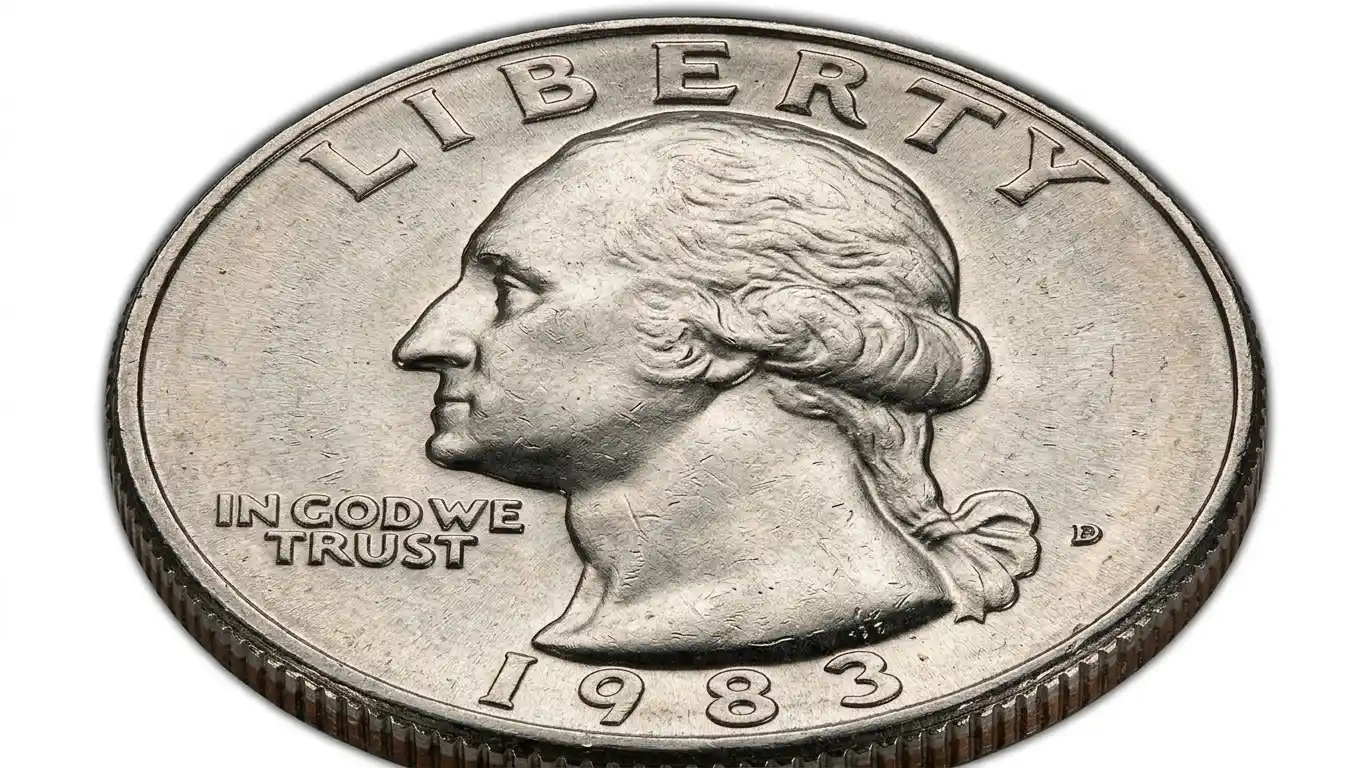
Small observations change evaluation.
Production of the 1983 quarter coins in lacked official Mint Sets.
This fact limits available Mint State examples.
Most of the mintage entered circulation immediately.
Finding coins in superior condition requires studying bank rolls.
Market demand for this date consistently exceeds the supply of quality specimens.
Feature | Specification |
Composition | Copper and Nickel |
Weight | 5.67 g |
Shape | Round |
Edge | 119 ridges |
Production Volume by Facility
Three main facilities distributed the total mintage.
Philadelphia Mint → 673,535,000 pieces.
Denver Mint → 617,806,446 pieces.
San Francisco Mint → 3,279,126 pieces.
Value Trends for 1983-P in MS65 Condition
2022 price: $38.00 per unit.
2023 price: $45.00 per unit.
2024 price: $52.00 per unit.
2025 price: $64.00 per unit.
2026 price: $78.00 per unit.
Varieties and Production Errors
Manufacturing failures created unique objects for study.
Worth of these specimens depends on error visibility.
Double Die Reverse
Doubling of elements on the back happens rarely.
Noticeable shifts appear on the lettering at the bottom.
Letters show characteristic thickening.
Annual growth of value reaches 8%.
AU58 specimen worth: $150.00.
MS63 coin price: $450.00.
MS65 top grade value: $1,200.00.
Off Centre Striking
Improper feeding of the metal disc into the striking zone causes a partial image.
Value increases while the date remains visible.
10% shift
25% shift
50% shift
Market dynamics for a 50% shift:
2024 price: $260.00.
2025 price: $295.00.
2026 price: $330.00.
Broadstruck Specimens
A coin struck outside the retaining collar expands in diameter.
Reeding on the edge vanishes.
Value varies based on the degree of deformation.
Average MS64 worth: $75.00.
Philadelphia Mint: 1983-P Analysis
Absence of souvenir sets made this mintmark difficult to find in high grades.
Heritage Auctions recorded a peak sale for this issue.
An MS67 specimen sold for $15,862.00.
PCGS Survival Statistics
MS65: 1240 units
MS66: 312 units
MS67: 18 units
MS67+: 1 unit
Dropping one grade level results in a 75% price decrease — see it for free with the free coin appraisal app.
Correlation example: MS67 costs $4,500.00, whereas MS66 costs $650.00.
Denver Mint: 1983-D Details
Denver strikes usually show better quality than Philadelphia ones.
Finding a coin without contact marks remains difficult.
Total mintage exceeds 600 million units.
Market Comparison for 1983-D
Grade | 2024 Price | 2026 Price | Increase % |
MS64 | $18.00 | $26.00 | +44% |
MS65 | $55.00 | $82.00 | +49% |
MS66 | $320.00 | $475.00 | +48% |
MS67 | $2,100.00 | $2,950.00 | +40% |
High concentration of small scratches comes from bag transport methods.
Coins hitting each other leave microscopic damage.
San Francisco Mint: 1983-S Proof
Proof coins were made specifically for collectors.
Staff used polished dies and metal blanks.
Surface displays a mirror-like shine.
Relief appears frosted.
Proof Quality Tiers
Deep Cameo → maximum contrast.
Cameo → moderate contrast.
Brilliant → zero contrast.
1983-S PR70DCAM worth: $250.00.
1983-S PR69DCAM price: $15.00.
A huge price gap results from market perfectionism.
Any deviation from ideal status cancels the premium value.
Minting Characteristics and Die Wear
Equipment intensity in 1983 led to rapid destruction of working surfaces.
Wear marks appear as radial lines.
These lines move from the center toward the edge.
Such features reduce aesthetic appeal.
Grade evaluation considers detail sharpness.
Washington's hair → wear indicator.
Eagle's feathers → strike pressure indicator.
Motto letters → die clogging indicator.
Preservation Factors
Transportation in canvas bags → "bag marks" appearance.
Long duration in circulation → high relief flattening.
Environment chemical influence → patina color change.
Poor storage in plastic albums → green residue formation.
Rarity Table: High Grades
Certified population data follows.
Mint | MS66 | MS67 | MS68 |
1983-P | 450 | 22 | 0 |
1983-D | 680 | 45 | 1 |
The single 1983-D in MS68 condition is unique.
Its estimated value exceeds $10,000.00.
Impact of Missing 1983 Uncirculated Sets
The US Mint skipped official sets in 1982 and 1983.
Budget restrictions caused this decision.
Usually, such sets provide the main source for perfect coins.
Collectors must search standard rolls instead.
Probability of finding MS67 in a roll is 1 in 50,000.
Search difficulty supports high price levels.
Circulation Ratios
1983: 98% of mintage in circulation
1984: 85% of mintage in circulation (due to sets)
1985: 82% of mintage in circulation
A 13-16% difference significantly impacts availability.
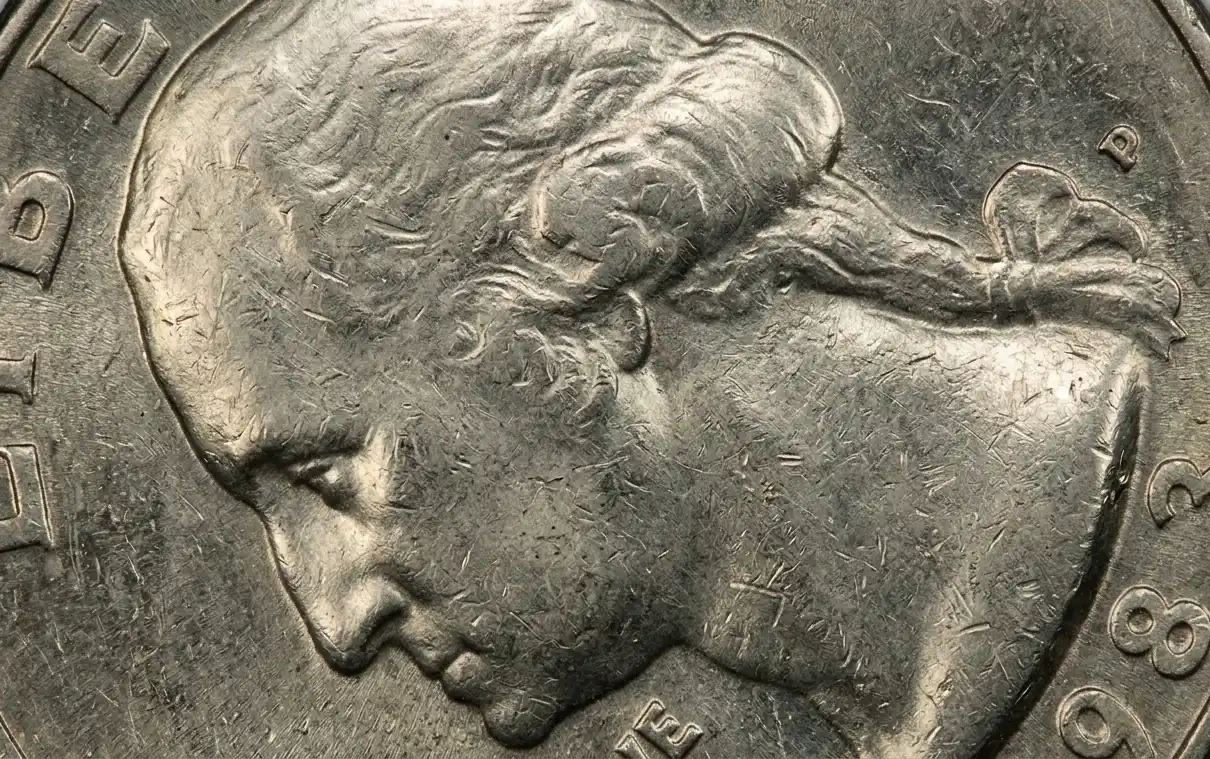
Identification Guidelines
Initial inspection requires a free coin value lookup.
Attention stays on key zones.
Area behind Washington's ear.
Central feathers on the eagle's breast.
Fields surrounding the date.
Deep scratches prevent achieving a high grade.
Cleaning marks with abrasives cancel numismatic worth.
The coin must possess original mint luster.
Original luster signs:
"Cartwheel" effect under light rotation.
Absence of dull spots on open fields.
Uniform color across the surface.
Authenticity Algorithm
Weight → 5.67 grams.
Magnetic reaction → none.
Diameter → 24.3 millimeters.
Weight consistency is a critical factor.
Deviation over 0.2 grams suggests a counterfeit or wrong metal blank.
Investment Potential of the 1983 Quarter
Investing in this date makes sense only for graded specimens.
Sending coins for certification involves risks.
NGC or PCGS services cost around $40.00 including shipping.
Receiving an MS64 grade makes the investment unprofitable.
MS64 value: $20.00.
Profit starts with an MS66 grade or higher.
Five-Year Worth Forecast
Predicted growth for MS66 → 12% annually.
Predicted growth for MS67 → 20% annually.
Demand stability comes from collectors finishing Washington quarter sets.
Album gaps drive auction purchases.
Mechanical Damage vs Mint Errors
Distinguishing circulation damage from production defects is vital.
Counting machine scratches often resemble mint errors.
Signs of Mechanical Wear
Dents with jagged edges
Flattened edges
Contact marks from other metals
Signs of Mint Errors
Sharp defect boundaries
Absence of external pressure marks on the metal
Feature repetition across multiple specimens from one die
Microscope usage reveals metal flow direction.
Metal fills gaps under high pressure during a die strike.
This process creates a specific surface structure.
Duplicating this structure mechanically is impossible.